
WHAT TO DO AFTER
FORESTRY MULCHING
The first 24 months decide whether your cleared tract turns into productive ground or a wall of regrowth. Here's the recovery plan we hand every Black-Line mulching client.
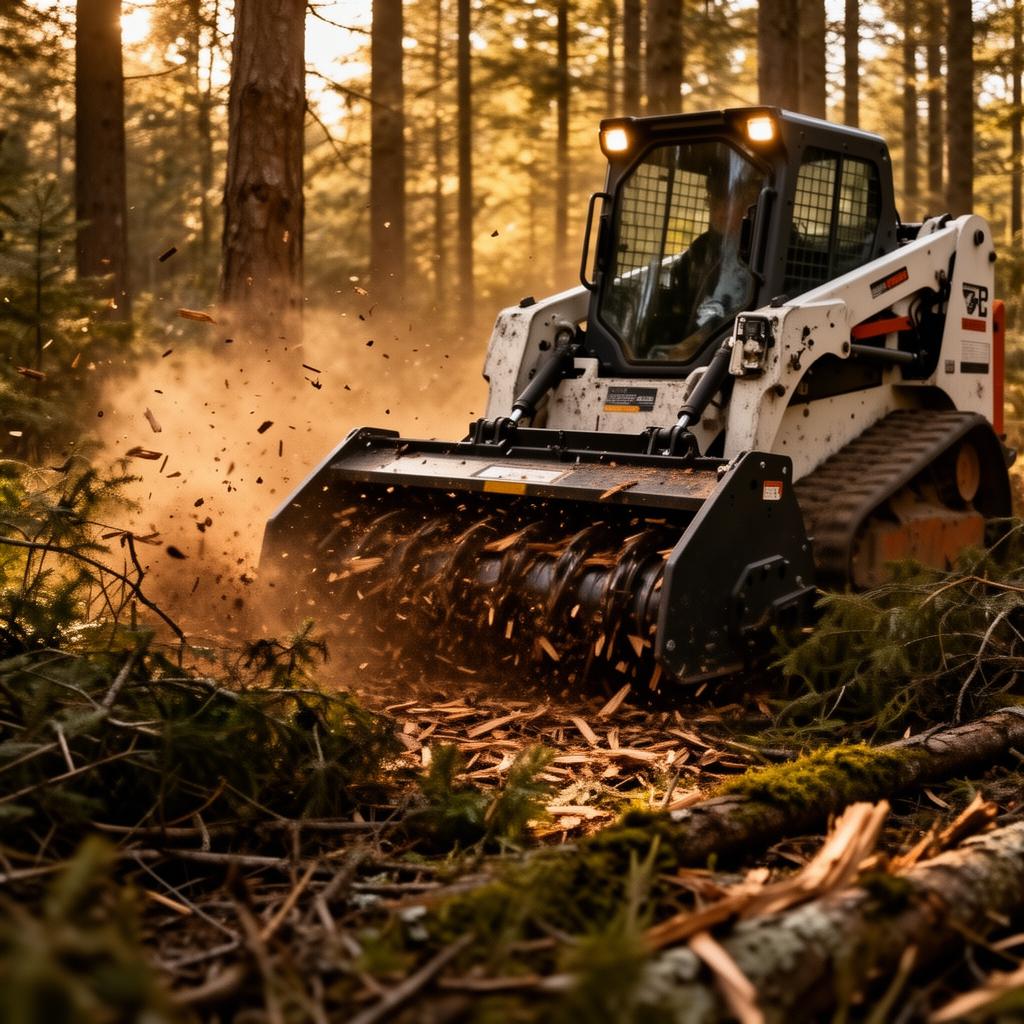
Forestry mulching leaves you with a clean canvas — a few inches of woodchip mulch, intact topsoil, and stumps ground low. What you do in the next two years decides whether that canvas becomes a food plot, a pasture, a pine stand, or a thicket of sweetgum sprouts. The work is straightforward; the timing is everything.
FIRST 7–10 DAYS AFTER THE CREW LEAVES
- Walk the entire tract — note any ruts deeper than 4 inches and flag for repair.
- Check slopes for exposed mineral soil. Anything over 8% grade needs immediate cover.
- Identify stumps and root crowns you want treated (oak, sweetgum, and maple resprout aggressively).
- Spread mulch from thick piles into bare patches — aim for an even 2–4 inch layer site-wide.
- Install silt fence or straw wattles at the base of slopes draining toward water.
SEEDING TIMELINE
Fresh mulch ties up nitrogen as it decomposes. Pick species that tolerate that — or fertilize to compensate.
Broadcast annual rye (50 lbs/ac) or oats (60 lbs/ac) on any bare or thin-mulch areas. Cheap insurance against erosion before the first hard rain.
Overseed crimson clover or arrowleaf clover at 15–20 lbs/ac to fix nitrogen the breaking-down mulch is consuming. Drag a chain harrow to improve seed-to-soil contact.
Stick to forgiving annuals: cereal rye, oats, brassicas (turnips, radish). Add 200 lbs/ac of 10-10-10 to offset the nitrogen tie-up from decomposing wood.
Soil test, lime to pH 6.2–6.5, then plant your target mix — clover blends, chicory, native warm-season grasses, or pine seedlings for timber.
STOP THE RESPROUTS
Skip this step and most hardwood stumps will be 4–6 feet tall by year two. A single well-timed herbicide pass does 80–90% of the work.
- Wait 60–120 days after mulching — resprouts need 6–12 inches of leaf area to absorb foliar herbicide effectively.
- Use triclopyr (e.g., Garlon 4) at 1–2% solution for hardwood resprouts; add a methylated seed oil surfactant.
- For mixed sites with grasses you want to keep, use a selective like Arsenal AC (imazapyr) at label rate.
- Spray on a calm morning, 60–85°F, with no rain forecast for 24 hours. Avoid drift onto desirable trees.
- Plan one follow-up spot-spray in year two — sweetgum and oak commonly take two passes to fully control.
WHAT WE SEE GO WRONG
It's free erosion control and weed suppression — leave it.
Hardwood resprouts double in size every season unchecked.
Nitrogen tie-up will starve clover and chicory. Wait.
First heavy rain washes seed and topsoil into the nearest ditch.
Black-Line bundles a recovery walk-through with every mulching contract — we'll mark stumps for treatment, recommend a seed mix for your soil, and quote the follow-up herbicide pass before we leave the site.
RECOVERY QUESTIONS
PLANNING A MULCHING JOB?
Tell us your acreage and goal — pasture, food plot, timber, or homesite — and we'll quote both the clearing and the recovery plan together.